Josephus
(AD 37/38 - c. 100)





Theology on the Web helps over 2.5 million people every year to find high quality theological resources that will help to equip them to serve God and to know Him better (2 Timothy 2:15). Like other websites that provide free services, it is dependent on donations to enable it to grow and develop and only 0.004% of visitors currently do so. If you would like to support this site, please use one of the options to the right of this message.
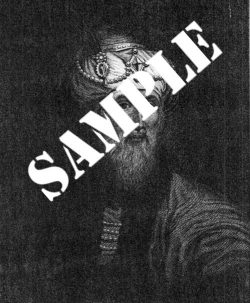
Josephus (from a pre-1900
edition of The Antiquities)
Click on thumbnail to download larger
image
(see copyright
information)
Synopsis
The writings of the Jewish historian Josephus are invaluable as a primary source of New Testament background material. Without them it would be all but impossible to verify or in some cases even to understand some of the historical references in the Gospels and in the book of Acts.[1] Born a priest of royal (Hasmonean) descent,[2] he was captured by the Roman army in Galilee in AD 67, were he was leading the Jewish revolt against them. Later, writing with the sponsorship of the Roman Emperor Vespasian,[3] he appears to have had two main purposes. These were to demonstrate both the veracity of the Jewish religion and to promote his thesis that the Romans were God's instruments in punishing Israel for her departure from the observance of the Law. Not surprisingly Josephus was regarded as a traitor by his own people.[4]In the past the works of Josephus have suffered widespread misunderstanding and misuse.[5] They owe their survival initially to their Imperial patronage, and then to their appropriation by the Christian church, which treasured them for their references to Jesus, John the Baptist, and other New Testament characters and places.[6] They were also used to support the belief that God has rejected Judaism,[7] despite the fact that this was the exact opposite of what Josephus set out to demonstrate! His writings were used widely in the early church.[8] A late tradition held that he actually became a Christian, but Origen specifically denied this.[9] Origen is thought to have based his apologetic work Against Celsus on the model provided by Josephus' Against Apion.[10] His Life is seen by many as the first Western biography,[11] but its stylistic nature means that it is not always factually accurate.
Studies by scholars of Josephus' works have shown that he had both a thorough understanding of Hebrew and Palestinian exegetical techniques.[12] Faced with the challenge of writing for a foreign audience he did not relapse into wholesale allegory[13] or omit large parts of the biblical account. Rather he strove always to be as faithful to the text as possible, omitting material only when absolutely necessary.[14] Even some of his more unusual interpretation are not without precedent and are possible renderings of the Hebrew text. The envious motive of the serpent,[15] while not explicitly stated in Genesis, is nonetheless implied and Josephus' interpretation is quite plausible.[16] For this reason we can be relatively confident that his interpretations were representative of Palestinian Judaism in the first century
The use made of the works of Josephus by the early church fathers varied greatly. In the western church only Tertullian utilised him to any great extent.[17] Minucius Felix cites him in support of his argument that the Jews foresook God before He forsook them.[18] Josephus was more widely read in the eastern church, but it was not until the time of Origen that his works had any influence on biblical exegesis.[19] Origen found in Josephus an extra-biblical source of historical information, and adopted many of Josephus' additions to the biblical accounts.[20] When compared to the influence that Philo had on biblical exegesis, Josephus' contribution was small. He was seen as a historical witness (particularly valuable in his contributions to chronology)[21] whereas Philo was viewed as a pattern for the allegorical method. For this reason it is unwise (as some Creationists are in the habit of doing) to exaggerate the impact of Josephus' interpretation of Genesis on the early church simply because he is a more favourable witness.
Rob Bradshaw, Webmaster
References
[1] H. Schreckenburg "Flavius Josephus," G.W. Bromiley, gen.ed., International Standard Bible Encyclopedia, rev. Vol. 2. (Grand Rapids: Eerdmans, 1982), 1132-1133.
[2] Josephus, Life, 1; William Whiston, The Works of Josephus (Peabody, Massachusetts: Hendrickson, 1987), 1. In this translation the traditional reference is given first, followed by the reference to the Greek text paragraph number in brackets, e.g. Josephus, Antiquities, 1.1.2 (34).
[3] Steve Mason, Josephus and the New Testament. (Peabody, Massachusetts: Hendrickson, 1992), 8.
[4] Mason, 24-26.
[5] See further Mason, 7-33.
[6] Mason, 8.
[7] Mason, 10-19.
[8] They were used, for example, by Justin Martyr, Tertullian, Eusebius and Jerome.
[9] Origen, Commentary in Matthew 10.17; Celsus 1.47 (ANF, Vol. 4, 416).
[10] Mason, 10.
[11] Mason, 36, but note 51, n.1.
[12] H.W. Basser, "Josephus As Exegete," Journal of the American Oriental Society, Vol. 107 (1987): 21.
[13] A good example of this is Josephus' interpretation of the four rivers in Eden (Antiquities, 1.1.3 (38-39) which are based on etymology and not created by reading a Platonic philosophy into the text as Philo had done. Basser, 26.
[14] Basser, 22, 27, 30.
[15] Josephus, Antiquities, 1.1.4 (1.41-42).
[16] Basser, 27.
[17] Michael E. Hardwick, Josephus as an Historical Source in Patristic Literature Through Eusebius, Brown Judaic Studies 128 (Atlanta, Georgia: Scholars Press., 1989), 112.
[18] Minucius Felix, Octavius, 33 (ANF, Vol. 4, 193-194).
[19] Hardwick, 114.
[20] Hardwick, 116.
[21] Hardwick, 114. Josephus was used by both Theophilus of Antioch (Autolycus, 3.24-25) and Eusebius as a source of chronological data. Hardwick, 11, 95.
Bibliographies
Primary Sources
 William Whiston, translator, The Works of
Josephus. Peabody, Massachusetts: Hendrickson, 1987. Hbk. ISBN: 0913573868.
pp.926.
William Whiston, translator, The Works of
Josephus. Peabody, Massachusetts: Hendrickson, 1987. Hbk. ISBN: 0913573868.
pp.926.Secondary Sources
 |
Harold W. Attridge, The Interpretation of Biblical History in the Antiquitates Judaicae of Flavius Josephus. Harvard Dissertations in Religion, No. 7. Missoula: Scholars, 1976. Pbk. ISBN: 0891300813. |
 |
H.W. Attridge, "Josephus and his Works," Michael E. Stone, ed., Jewish Writings of the Second Temple Period. Literature of Jewish People in Period of 2nd Temple & Talmud. Philadelphia: Augsburg Fortress Publishers, 1984. Hbk. ISBN: 0800606035. pp. 185-232. |
 |
 Michael Avioz, Legal Exegesis of Scripture in the Works of Josephus. London: T & T. Clark, 2020. ISBN: 9780567681164. pp.192. [Sign-up to Perlego and access book instantly - 10% discount for new subscriptions] Michael Avioz, Legal Exegesis of Scripture in the Works of Josephus. London: T & T. Clark, 2020. ISBN: 9780567681164. pp.192. [Sign-up to Perlego and access book instantly - 10% discount for new subscriptions] |
|
David A. Barish, "The Autobiography of Josephus and the Hypothesis of a Second Edition of His Antiquities," Harvard Theological Review 71.1-2 (1978): 61-75. |
|
H.W. Basser, "Josephus As Exegete," Journal of the American Oriental Society, Vol. 107 (1987): 21-30. |
|
Albert I. Baumgarten, "Josephus and Hippolytus on the Pharisees," Hebrew Union College Annual 55 (1984): 1-25. |
|
Christopher T. Begg, "The Gedaliah Episode and Its Sequels in Josephus," Journal for the Study of Pseudepigrapha 12 (1994): 21-46. |
|
Christopher T. Begg, "Joash and Elisha in Josephus. Ant. 9.177-185," Abr-Nahrain 32 (1994): 28-46. |
|
Christopher T. Begg, "Amaziah of Judah According to Josephus (Ant. 9,186-204)," Antonianum 70.1 (1995): 3-30. |
|
Christopher T. Begg, "Abimelech, King of Shechem, According to Josephus," Ephemerides Theologicae Lovanienses 72 (1996): 146-164. |
|
Christopher T. Begg, "Ahaz, King of Judah according to Josephus," Scandinavian Journal of the Old Testament 10.1 (1996): 28-52. |
|
Christopher T. Begg, "Athaliah's Coup and Overthrow According to Josephus," Antonianum 71.2 (1996): 191-210. |
 |
Christopher T. Begg, "Jotham and Amon: Two Minor Kings of Judah
According to Josephus," Bulletin for Biblical Research 6 (1996):
1-13. pdf pdf |
|
Christopher T. Begg, "Solomon's Two Dreams According to Josephus," Antonianum 71.4 (1996): 687-704. |
|
Christopher T. Begg, "The Cisjordanian Altar(s) and Their Associated Rites According to Josephus," Biblische Zeitschrift 41.2 (1997): 192-211. |
|
Christopher T. Begg, "David's Second Sparing of Saul According to
Josephus," Tyndale Bulletin 48.1 (1997): 93-117. pdf |
|
Christopher T. Begg, "David's Transfer of the Ark According to
Josephus," Bulletin for Biblical Research 7 (1997): 10 36. pdf |
|
Christopher T. Begg, "The Jeroboam-Ahijah Encounter according to Josephus," Abr-Nahrain 34 (1997): 1-17. |
|
Christopher T. Begg, "Samuel Leader of Israel According to Josephus," Antonianum 72.2 (1997): 199-216. |
|
Christopher T. Begg, "Samuel's Farewell Discourse According to Josephus," Scandinavian Journal of the Old Testament 11.1 (1997): 56-77. |
|
Christopher T. Begg, "Solomon's Apostasy (1 Kgs 11:1-13) According to Josephus," Journal for the Study of Judaism 28.3 (1997): 294-313. |
|
Christopher T. Begg, "The Transjordanian Altar (Josh 22:10-34) According to Josephus (Ant. 5.100-114) and Pseudo-Philo (LAB 22.1-8)," Andrews University Seminary Studies 35.1 (1997): 5-19. |
|
Christopher T. Begg, "The Assassination of Ishbosheth according to Josephus," Antonianum 73.2 (1998): 241-253. |
|
Christopher T. Begg, "David and Mephibosheth According to Josephus," Andrews University Seminary Studies 36.2 (Autumn 1998): 165-182. pdf |
|
Christopher T. Begg, "David's Dismissal by the Philistines according to Josephus," Theologische Zeitschrift 54.1 (1998): 111-119. |
|
Christopher T. Begg, "David's Double Escape According to Josephus," Journal of Progressive Judaism 10 (1998): 28-45. |
|
Christopher T. Begg, "The Return of the Ark according to Josephus," Bulletin for Biblical Research 8 (1998): 15-37. pdf |
|
Christopher T. Begg, "The Revolt of Sheba According to Josephus," Jian Dao 9 (1998): 1-26. |
|
Christopher T. Begg, "David's Reaction to the Death of Saul According to Josephus," Jian Dao 11 (1999): 1-13. |
|
Christopher T. Begg, "King Saul's First Sin According to Josephus," Antonianum 74.4 (1999): 685-696. |
|
Christopher T. Begg, "The Ai-Achan Story (Joshua 7-8) according to Josephus," Jian Dao 16 (2001): 1-20. |
|
Nachman Ben-Yehuda, "Where Masada's Defenders Fell, a Garbled Passage in Josephus Has Obscured the Location of the Mass Suicide," Biblical Archaeology Review 24.6 (1998): 32-39. |
|
 David
Bentley-Taylor, Josephus: A Unique Witness. Christian Focus
Publications, 2000. Pbk. ISBN: 1857924991. pp.139. David
Bentley-Taylor, Josephus: A Unique Witness. Christian Focus
Publications, 2000. Pbk. ISBN: 1857924991. pp.139. |
|
Helen K. Bond, "New Currents in Josephus Research," Currents in Research: Biblical Studies 8 (2000): 162-190. |
|
Pieter J.J. Botha, "History, rhetoric and the writings of Josephus," Neotestamentica 31.1 (1997): 1-20. pdf |
|
F.F. Bruce, "Josephus and Daniel," Annual of the Swedish Theological Institute 4 (1965): 148-62. [Presidential Address to the Society for Old Testament Study, London, January 1965.] |
|
 Honora Howell Chapman & Zuleika Rodgers, eds., A Companion to Josephus. Hoboken, NJ: Wiley-Blackwell, 2015. ISBN: 978-1118325179. [Sign-up to Perlego and access book instantly - 10% discount for new subscriptions] Honora Howell Chapman & Zuleika Rodgers, eds., A Companion to Josephus. Hoboken, NJ: Wiley-Blackwell, 2015. ISBN: 978-1118325179. [Sign-up to Perlego and access book instantly - 10% discount for new subscriptions] |
|
G.F. Chestnut, The First Christian Histories: Eusebius, Socrates, Sozomen, Theodoret and Evagrius, 2nd edn. Macon: Mercer University Press, 1998. Pbk. ISBN: 0865542031. |
|
Duane L. Christensen, "Josephus and the twenty-two-book canon of sacred scripture," Journal of the Evangelical Theological Society 29.1 (March 1986): 37-46. pdf |
|
 Shaye J.D. Cohen, Josephus
in Galilee and Rome: His Vita and Development as a Historian. Leiden:
Brill, 2002. Pbk. ISBN: 0391041584. pp.297. Shaye J.D. Cohen, Josephus
in Galilee and Rome: His Vita and Development as a Historian. Leiden:
Brill, 2002. Pbk. ISBN: 0391041584. pp.297. |
|
Shaye J.D. Cohen & Joshua J. Schwartz, eds., Studies in Josephus and the Varieties of Ancient Judaism: Louis H. Feldman Jubilee Volume. Ancient Judaism and Early Christianity. Leiden: Brill, 2006. Hbk ISBN: 9004153896. pp.328. |
|
Shaye Cohen, "History and Historiography in the Against Apion of Josephus," History and Theory XXVII (1988): 1-11. |
|
Frederick Cornwallis Conybeare [1856-1924], "An Old Armenian Version of Josephus," Journal of Theological Studies 9 No 36 July 1908): 577-583. pdf [This material is in the Public Domain] |
|
Louis H Feldman & Gaohei Hata, Josephus, Judaism, and Christianity. Detroit: Wayne State University Press, 1987. Pbk. ISBN: 0814318320. pp.448. |
|
Louis H. Feldman, "Origen's Contra Celsus and Josephus' Contra Apionem: The Issue of Jewish Origins," Vigiliae Christianae 44.2 (1990): 105-135. |
|
Louis H. Feldman, "Josephus' Portrait of Elisha," Novum Testamentum 36.1 (1994): 1-28. |
|
Louis H. Feldman, Studies in Josephus' Rewritten Bible. Supplements to the Journal for the Study of Judaism, Vol. 58. Leiden: Brill, 1998. Hbk. ISBN: 9004108394. pp.663. |
|
 Louis H. Feldman & Wolfgang Haase (ed.), Josephus and Modern Scholarship (1937–1980). Berlin: De Gruyter, 2015. ISBN: 978-3110841589. pp.1070. [Sign-up to Perlego and access book instantly - 10% discount for new subscriptions] Louis H. Feldman & Wolfgang Haase (ed.), Josephus and Modern Scholarship (1937–1980). Berlin: De Gruyter, 2015. ISBN: 978-3110841589. pp.1070. [Sign-up to Perlego and access book instantly - 10% discount for new subscriptions] |
|
Louis H. Feldman, "Josephus's View of the Amalekites," Bulletin
for Biblical Research 12.2 (2002): 161-186. pdf |
|
Louis.H. Feldman & Gaohei Hata, eds. Josephus, Judaism, and Christianity. Detroit / Leiden: Wayne University Press / Brill, 1987. Pbk. ISBN: 9004085548. |
|
Louis H. Feldman & Gaohei Hata, eds. Josephus, the Bible and History. Wayne State University Press, 1989. Pbk. ISBN: 0814319831. pp.473. |
|
Louis H. Feldman, "Josephus' portrait of Jeroboam," Andrews University Seminary Studies 31.1 (Spring 1993): 29-51. pdf |
|
Louis H. Feldman, "Josephus' Portrait of Asa," Bulletin for
Biblical Research 4 (1994): 41-60. pdf |
|
Louis H. Feldman, "Josephus' Portrait of Ahasuerus," Australian Biblical Review 42 (1994): 17-38. |
|
Louis H. Feldman & John R.
Levison, eds., Josephus' Contra Apionem: Studies in Its Character and
Context, with a Latin Concordance to the Portion Missing in Greek. Arbeiten
Zur Geschichte Des Antiken Judentums & Des Urchristentums. Leiden: Brill,
1996. Hbk. ISBN: 9004103252. pp.400. |
|
Louis H. Feldman, "Philo's View of Moses' Birth and Upbringing," Catholic Biblical Quarterly 64.2 (2002): 258-281. |
|
Louis H. Feldman, "The Command, according to Philo, Pseudo-Philo, and Josephus, to annihilate the seven nations of Canaan," Andrews University Seminary Studies 41.1 (Spring 2003): 13-29. pdf |
|
Thomas W. Franxman, Genesis and the 'Jewish Antiquities' of Flavius Josephus, Biblica et Orientalia, 35. Rome: Biblical Institute Press, 1979. |
|
Martin Goodman, "Josephus as Roman Citizen," F. Parente, & J. Sievers, eds., Josephus and the History of the Greco-Roman Period. Essays in Memory of Morton Smith. Studia Post Biblica, 41. Leiden: Brill, 1994. Hbk. ISBN: 9004101144. pp.329-338. |
|
Martin Goodman, "A Note on the Qumran Sectarians, the Essenes and Josephus," Journal of Jewish Studies 46.1-2 (1995): 161-166. |
|
Lester L. Grabbe, Judaism from Cyrus to Hadrian: The Roman Period. London: SCM Press Ltd., 1994. Pbk. ISBN: 0334025788. pp.768. |
|
Leonard Greenspoon, "The Pronouncement Story in Philo and Josephus," Semeia 20 (1981): 73-80. |
|
Michael E. Hardwick, Josephus as an Historical Source in Patristic Literature Through Eusebius, Brown Judaic Studies 128 (Atlanta, Georgia: Scholars Press, 1989. |
|
G. Hata, "Is the Greek Version of Josephus' 'Jewish War' a translation or a Rewriting of the First Version?" Jewish Quarterly Review 66 (1975): 89-108. |
|
 James S. McLaren, Turbulent Times?
Josephus and Scholarship on Judaea in the First Century CE. Sheffield:
Continuum International Publishing Group - Sheffield Academic Press, 1998. Hbk.
ISBN: 1850758913. pp.300. James S. McLaren, Turbulent Times?
Josephus and Scholarship on Judaea in the First Century CE. Sheffield:
Continuum International Publishing Group - Sheffield Academic Press, 1998. Hbk.
ISBN: 1850758913. pp.300. |
|
James S. McLaren, "Ananus, James, and Earliest Christianity. Josephus' Account of the Death of James," Journal of Theological Studies 52.1 (2001): 1-25. |
|
 Gottfried Mader, Josephus and the Politics
of Historiography: Apologetic and Impression Management in the Bellum
Judaicum. Mnemosyne, Bibliotheca Classica Batava. Supplementum, No 205.
Leiden: Brill, 2000. Hbk. ISBN: 9004114467. pp.172. Gottfried Mader, Josephus and the Politics
of Historiography: Apologetic and Impression Management in the Bellum
Judaicum. Mnemosyne, Bibliotheca Classica Batava. Supplementum, No 205.
Leiden: Brill, 2000. Hbk. ISBN: 9004114467. pp.172. |
|
 Steve Mason, Flavius
Josephus on the Pharisees: A Composition Critical Study. Studia
Post-Biblica, Vol 39. Leiden: Brill, 1991. Pbk. ISBN: 0391041541. pp.424. Steve Mason, Flavius
Josephus on the Pharisees: A Composition Critical Study. Studia
Post-Biblica, Vol 39. Leiden: Brill, 1991. Pbk. ISBN: 0391041541. pp.424. |
|
 Steve Mason, Josephus and
the New Testament. Peabody, Massachusetts: Hendrickson, 1992. ISBN:
0943575990. pp.248. Steve Mason, Josephus and
the New Testament. Peabody, Massachusetts: Hendrickson, 1992. ISBN:
0943575990. pp.248. |
|
Steve Mason, "Will the Real Josephus Please Stand Up?" Biblical Archaeology Review 23.5 (1997): 58-65, 67-68. |
|
 Steve Mason, Understanding Josephus.
Journal for the Study of the Pseudepigrapha Supplement Series, No. 32.
Sheffield: Continuum International Publishing Group - Sheffield Academic Press,
1998. Hbk. ISBN: 1850758786. pp.260. Steve Mason, Understanding Josephus.
Journal for the Study of the Pseudepigrapha Supplement Series, No. 32.
Sheffield: Continuum International Publishing Group - Sheffield Academic Press,
1998. Hbk. ISBN: 1850758786. pp.260. |
|
David P. Moessner, "'Eyewitnesses,' 'Informed Contemporaries,' and 'Unknowing Inquirers': Josephus' Criteria for Authentic Historiography and the Meaning of Parakoloutheo," Novum Testamentum 38.2, (1996): 105-122. |
|
H.W. Montefiore, "Joesphus and the New Testament," Novum Testamentum 4 (1960): 139-160. |
|
H.W. Montefiore, "Joesphus and the New Testament," Novum Testamentum 4 (1960): 307-318. |
|
James A. Montgomery, "The Religion of Flavius Josephus," Jewish Quarterly Review 11 (1920-1921): 277-305. |
|
E. Nodet, "Josephus and the Pentateuch," Journal for the Study of Judaism 28.2 (1997): 154-194. |
|
James Carleton Paget, "Some Observations on Josephus and Christianity," Journal of Theological Studies 52.2 (2001): 539-624. |
|
F. Parente, & J. Sievers, eds., Josephus and the History of the Greco-Roman Period. Essays in Memory of Morton Smith. Studia Post Biblica, 41. Leiden: Brill, 1994. Hbk. ISBN: 9004101144. pp.392. |
|
Sarah J.K. Pearce, "Flavius Josephus as Interpreter of Biblical Law: the Council of Seven and the Levitical Servants in Jewish Antiquities 4:124," Heythrop Journal 36.4 (1995): 477-492. |
|
Tessa Rakak, Josephus: the Man and His Society. London: Duckworth, 1983. |
|
 Tessa Rajak, Josephus: The Historian and his
Society, 2nd edn. London: Gerald Duckworth & Co. Ltd., 2002. Pbk. ISBN:
0715631705. pp.272. Tessa Rajak, Josephus: The Historian and his
Society, 2nd edn. London: Gerald Duckworth & Co. Ltd., 2002. Pbk. ISBN:
0715631705. pp.272. |
|
Karl Heinrich Rengstorf, ed., The Complete Concordance to Flavius Josephus, Study Edition. Leiden: Brill, 2002. Hbk. ISBN: 9004128298. pp.2247. |
|
John H. Rhoads, "Josephus Misdated The Census of Quirinius," Journal of the Evangelical Theological Society 54.1 (March 2011): 65-87. pdf |
|
D.R. Schwartz, "Josephus and Philo on Pontius Pilate," The Jerusalem Cathedra 3 (1983): 26-45. |
|
Seth Schwartz, Josephus and Judaean Politics. Columbia Studies in the Classical Tradition, 18. Leiden: Brill, 1997. Hbk. ISBN: 9004092307. pp.257. |
|
John Shrugnell, "Flavius Josephus and the Essenes: Antiquities XVIII. 18-22," Journal of Biblical Literature 77 (1958): 106-115. |
|
R.J.H. Shutt, Studies in Josephus. 1961. |
|
Dorothy I. Sly, "1 Peter 3:6b in the Light of Philo and Josephus," Journal of Biblical Literature 110.1 (1991): 126-129. |
|
Gregory E. Sterling, Historiography and Self-Definition: Josephus, Luke-Acts and Apologetic Historiography. Supplements to Novum Testamentum, Vol 64. Leiden: Brill, 1992. Hbk. ISBN: 9004095012. pp.456. |
|
M. Stern, "Notes on the Story of Joseph the Tobiad," (Josephus, Ant. II, 154ff.)," Tarbiz 32 (1962): 35-47. |
|
J. Strugnell, "Flavius Josephus and the Essenes: Antiquities xviii.18-22," Journal of Biblical Literature 77 (1958): 106-15. |
|
James D. Tabor, "'Returning to Divinity': Josephus Portrayal of the Disapperances of Enoch, Elijah, and Moses," Journal of Biblical Literature 108 (1989): 225-38. |
|
H. St. J. Thackeray, Josephus, the Man and the Historian. Hilda Stich Stoock Lectures. New York, 1929. |
|
Timothy Thornton, "Anti-Samaritan Exegesis Reflected in Josephus' Retelling of Deuteronomy, Joshua, and Judges," Journal of Theological Studies 47.1 (1996): 125-130. |
|
P. Villalba i Varneda, ed., The Historical Method of Flavius Josephus. Leiden: Brill, 1986. Hbk. ISBN: 9004076166. pp.296. |
|
D.S. Wallace-Hadrill, "Eusebius of Caesarea and the Testimonium Flavium (Josephus, Antiquities, XVIII 63f.)," Journal of Ecclesiastical History 25.4 (1974): 353-362. |
|
Herold Weiss, "The Sabbath in the Writings of Josephus," Journal for the Study of Judaism 29.4 (1998): 363-390. |
|
Alice Whealey, Josephus on Jesus: Evidence from the First Millennium," Theologische Zeitschrift 51.4 (1995): 285-304. |
|
Solomon Zeitlin, "The Christ Passage in Josephus," The Jewish Quarterly Review, n.s. 18 (1928): 231-255. |
Biographies
|
Flavius Josephus (Karl Hoeber) |
Related Subjects
 |
|
 |
|
 |
Alexander of Alexandria | Ambrose | Aristides | Arnobius | Athanasius | Athenagoras | Augustine | Basil | Boethius | John Cassian | Celsus | Clement of Alexandria | Clement of Rome | Constantine | Cyprian | Cyril of Alexandria | Cyril of Jerusalem | Ephraem the Syrian | Epiphanius | Eusebius of Caesarea | Gregory of Nazianzus | Gregory of Nyssa | Gregory Thaumaturgus | Hermas | Hilary of Poitiers | Hippolytus | Ignatius of Antioch | Irenaeus of Lyons | Julius Africanus | Jerome | John Chrysostom | Josephus | Justin Martyr | Justinian I | Lactantius | Leo the Great | Marcellus | Martin of Tours | Melito | Methodius | Minucius Felix | Novatian | Origen | Pachomius | Papias | Philo | Polycarp | Synesius of Cyrene | Tatian | Tertullian | Theodore of Mopsuestia | Theodoret | Theophilus | Tyconius | Ulfilas | Victorinus | Marius Victorinus
ABOUT | KEY | SITE MAP | INTRODUCTIONS | BIBLE | COUNCILS & CREEDS | DOCTRINE & PRACTICE | HERESIES & SECTS | HISTORY | MINISTRY | PEOPLE | PHILOSOPHY | WRITINGS | STUDY AIDS | BLOG | SUPPORT SITE | CONTACT